The FIFA World Cup 2026 is here, the Socceroos are winning, and Australian football fever is well and truly in the air. But beyond the goals and the glory, there’s a marketing story worth paying attention to — and SBS is the one telling it.
The problem SBS had to solve
With the World Cup hosted across North America this year, Australian fans face an uncomfortable reality: more than 65% of live matches are airing during Australian business hours. For a broadcaster whose entire commercial proposition is built on live sport, that’s a serious problem.
Most brands in this position would lean into the obvious — promote the replay function, highlight the on-demand offering, remind people they can catch up later. Safe. Sensible. Forgettable.
SBS did something much smarter.
Enter the World Cup Watchers’ Rights Association
Rather than apologising for the inconvenience or working around the problem quietly, SBS made the problem the campaign. They created a mock workers’ rights movement — the World Cup Watchers’ Rights Association — fronted by Ted Lasso star Nick Mohammed, complete with Australian comedian ambassadors and former Matildas goalkeeper Lydia Williams.
The campaign doesn’t just tell Australians they can watch the World Cup on SBS On Demand. It gives them permission, a cause and a community to belong to.
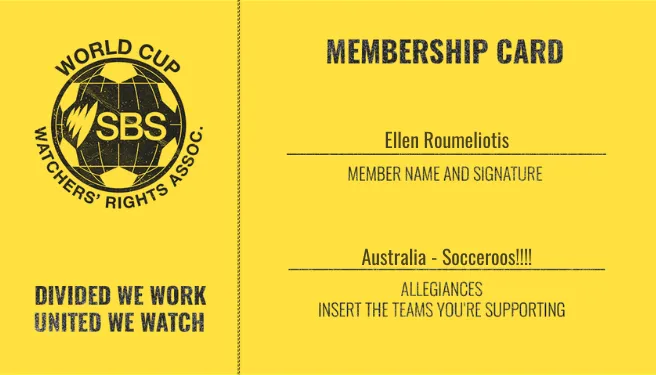
And the creative execution goes far beyond a hero video. SBS has produced a full suite of assets — formal-looking workplace invitations, PDF negotiation tactics for approaching your boss, and a personalised membership card editable in Canva. Every asset is shareable, playful and designed to extend the campaign’s reach organically.
This is moment marketing at its best.
What is moment marketing?
Moment marketing is the practice of aligning your brand with a cultural event, trend or shared experience in a way that feels timely and relevant rather than opportunistic. Done well, it generates talkability, reaches new audiences and builds genuine affinity with your brand.
The World Cup is an obvious example. But moments come in all shapes and sizes — a major sporting event, a cultural conversation, a seasonal shift, a viral trend, even a shared frustration that your audience all feels at once.
The key is identifying a moment that genuinely intersects with your audience and finding a way to show up that adds value rather than just riding the wave.
What SBS got right — and what you can learn from it
They led with a real insight
The campaign isn’t built on a tagline — it’s built on a genuine tension their audience faces. Matches during work hours is a real problem for real people. Starting with that truth made everything else feel relevant.
They committed to the idea fully
A half-hearted version of this campaign would have been a single social post with a Nick Mohammed quote. SBS built an entire world around it — a website, a suite of downloadable assets, ambassador activations and a clear call to action. The depth of the execution is what makes it memorable.
They made it participatory
The Canva membership card, the negotiation tactics, the workplace invitations — these aren’t just content, they’re tools. They give the audience something to do with the campaign, which dramatically extends its reach beyond paid media.
They reached beyond their existing audience
Around 50% of audiences that came in to watch the last World Cup hadn’t been on SBS before. This campaign is designed to bring in new and lapsed viewers — not just preach to the converted.
How to apply this to your own marketing
You don’t need a Ted Lasso star or a fancy brief to tap into a cultural moment. Here’s how to think about it practically:
Identify the moments that matter to your audience
What are they thinking about, talking about, or feeling right now? The World Cup, EOFY, school holidays, a major industry event — any of these can be a legitimate hook if your audience genuinely cares about them.
Find the intersection
The SBS campaign works because there’s a clear, honest connection between the moment (World Cup matches during work hours) and their product (SBS On Demand). Your moment marketing needs the same logic — what does this cultural moment have to do with what you actually offer?
Give people something to do
The most effective moment marketing campaigns are participatory. A downloadable, a shareable, a quiz, a challenge — anything that turns passive viewers into active participants extends your reach without additional media spend.
Move quickly
Moments have a shelf life. The brands that win at moment marketing are the ones with the processes and confidence to act fast. This doesn’t mean being reckless — it means having a clear enough brand voice that you can respond to opportunities without needing six rounds of approvals.
The takeaway
The Socceroos are in it. The whole country is watching. And SBS has reminded us that the best marketing doesn’t just promote — it participates.
Find your moment. Build something worth sharing around it. And commit to the idea fully.
And most importantly, GO THE SOCCEROOS!!!!!!!!
- All
- AI Search & Marketing
- Digital Marketing
- Digital Strategy
- Ecommerce
- Google Analytics
- Instagram Stories
- Marketing
- Meta
- Search Engine Marketing
- Search Engine Optimisation
- Social Media
- Social Media
- Social Media Advertising
- Social Media Marketing
- Social Media Strategy
- Uncategorized

Google’s AI Overviews are reshaping search by pulling answers from the places people are actually talking: Reddit, YouTube, Quora and other community-driven platforms. According to new data [...]
We recently posted a simple promotion on a client’s social media account. It was about a niche product - nothing flashy, not designed to go viral, just [...]
Starting July 10, 2025, public posts from professional Instagram accounts will start appearing in Google search results. That means your photos, Reels and videos could soon show [...]
One of the most common concerns we hear from clients is: “I feel like we’re repeating ourselves too much.” They worry that saying the same message more [...]

Quick Website Audit Checklist When was the last time you really looked at your website through the eyes of a customer? We often assume that once [...]

In a world where marketers battle for every second of audience attention, Labubu – a quirky character from Pop Mart’s “Monster” series - has done the seemingly [...]

Social media marketing is full of outdated advice, bad habits and half-truths that get repeated so often they start to sound like facts. But just because you’ve heard [...]

In our last article, we tackled a common misconception in digital advertising: Ads don’t fail because of the algorithm - they fail because of the offer. The [...]

We’ve seen it many times before. A campaign launches on Meta or Google. The creative looks schmick. The ad set enters the learning phase… and then, crickets. [...]

With the release of Google AI Overviews, we were left wondering what will become of Google Ads. If AI Overviews sit at the top of search results, [...]
Google’s AI Overviews are reshaping search by pulling answers from the places people are actually talking: Reddit, YouTube, Quora and other community-driven platforms. According to new data [...]
We recently posted a simple promotion on a client’s social media account. It was about a niche product - nothing flashy, not designed to go viral, just [...]
Starting July 10, 2025, public posts from professional Instagram accounts will start appearing in Google search results. That means your photos, Reels and videos could soon show [...]
One of the most common concerns we hear from clients is: “I feel like we’re repeating ourselves too much.” They worry that saying the same message more [...]
Quick Website Audit Checklist When was the last time you really looked at your website through the eyes of a customer? We often assume that once [...]
In a world where marketers battle for every second of audience attention, Labubu – a quirky character from Pop Mart’s “Monster” series - has done the seemingly [...]
Social media marketing is full of outdated advice, bad habits and half-truths that get repeated so often they start to sound like facts. But just because you’ve heard [...]
In our last article, we tackled a common misconception in digital advertising: Ads don’t fail because of the algorithm - they fail because of the offer. The [...]
We’ve seen it many times before. A campaign launches on Meta or Google. The creative looks schmick. The ad set enters the learning phase… and then, crickets. [...]
With the release of Google AI Overviews, we were left wondering what will become of Google Ads. If AI Overviews sit at the top of search results, [...]